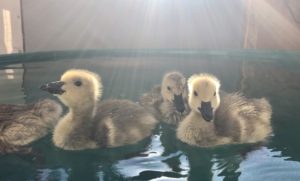
Geese
Waterfowl such as native Canada Geese often get leg or wing injuries.
If you have found an injured goose or gosling, email us first. We are limited to how many we can take in due to strict bird flu biosecurity protocols. If a young or adult goose is injured (e.g. bleeding or laying flat on ground), please collect it (with gloves) and email us for further directions. If it looks sick email us BEFORE capturing it.
Please note: Interior Wildlife does NOT raise goslings that are already imprinted on humans. We may assist in reuniting goslings with adult wild geese where appropriate.
Note that sick geese don’t always show clear signs of bird flu but can still infect other birds and die suddenly.
Please: No water or food (except for dandelion leaves for overnight). You may provide extra heat (e.g. a poultry heat lamp or warm rice sock)!
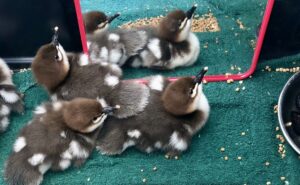
Ducks
There are over 20 types of ducks in BC. Some are found injured by human activity, including fish hooks. Accidents happen. In spring and summer we often see mallard ducklings separated from their parents.
Watch the duckling(s) for at least 24hrs to determine if truly orphaned, did you see the adult being killed? Are there other ducklings or is it alone? Where are they located (trapped in a window well, did they hatch on a roof ?). Email us BEFORE capturing lone ducklings please!
If an adult duck or young duckling is injured (e.g. bleeding, laying flat on ground or holding a wing in an abnormal position), you may collect it (with gloves) and email us for further directions.
Please: No water or food.
For temporarily keeping ducklings overnight you may provide fresh dandelion leaves & extra heat (e.g. a poultry heat lamp or warm rice sock)!
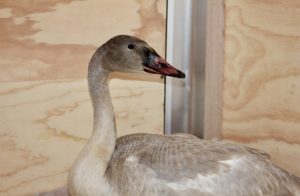
Swans
Often waterfowl such as native Trumpeter or Tundra Swans get leg or wing injuries.
If you have found an injured swan or young cygnet, email us first, as we need to ensure its capture will be done safely for humans & animals.
Note that sick swans don’t always show signs of bird flu but can still infect other birds and die suddenly.
We can certainly house and treat native swans, but capture needs to be done responsibly. Notify us as soon as possible via email so we can coordinate a safe capture.
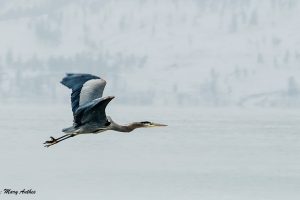
Herons
Often large wading birds such as Great Blue Herons sustain leg or wing injuries. Sometimes they are malnourished and lethargic or suffer from extreme heat in the Okanagan.
If you have found an injured heron or a lone and immobile or lethargic heron chick on the ground, email us for further directions prior to attempting capture of any herons.
We can certainly house and treat herons, but capture needs to be done responsibly. Herons get stressed very easily and handling needs to be done by experts. Notify us as soon as possible via email.
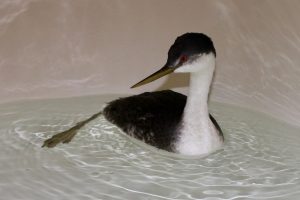
Grebes
Western and horned grebes can get grounded/found off water (esp. in the winter). They are diving birds that have to live on the water due to their unique physiology. Grebes can't take flight from, or walk on land. If you have found a grebe on land, please contact us as we are limited to how many we can house "on water" in our deep diving pools and the season of admission is a deciding factor too. Aquatic diving birds such as grebes should not be housed on land for over 24hrs and wearing gloves is mandatory to touch them (in order to avoid ruining waterproofing). Please beware of sharp beaks which they will use as a spear when approached by humans.
Notify us as soon as possible via email about grounded or injured grebes.
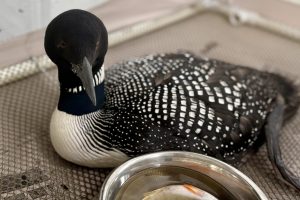
Loons
Often aquatic diving birds such as loons get foot injuries if they spend any time on land by accident. Loons can't take flight from or walk on land.
If you have found a grounded or beached loon off the water, or a lone loon chick, please email us for further directions. Avoid touching aquatic birds without gloves (to protect their waterproofing) and beware of sharp beaks that adult loons will use as a spear when approached by humans.
We can certainly house and treat loons, but capture needs to be done responsibly. Notify us as soon as possible about loons in distress via email.
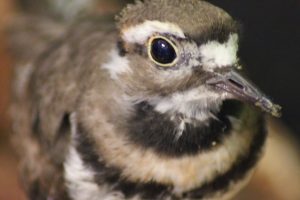
Killdeer
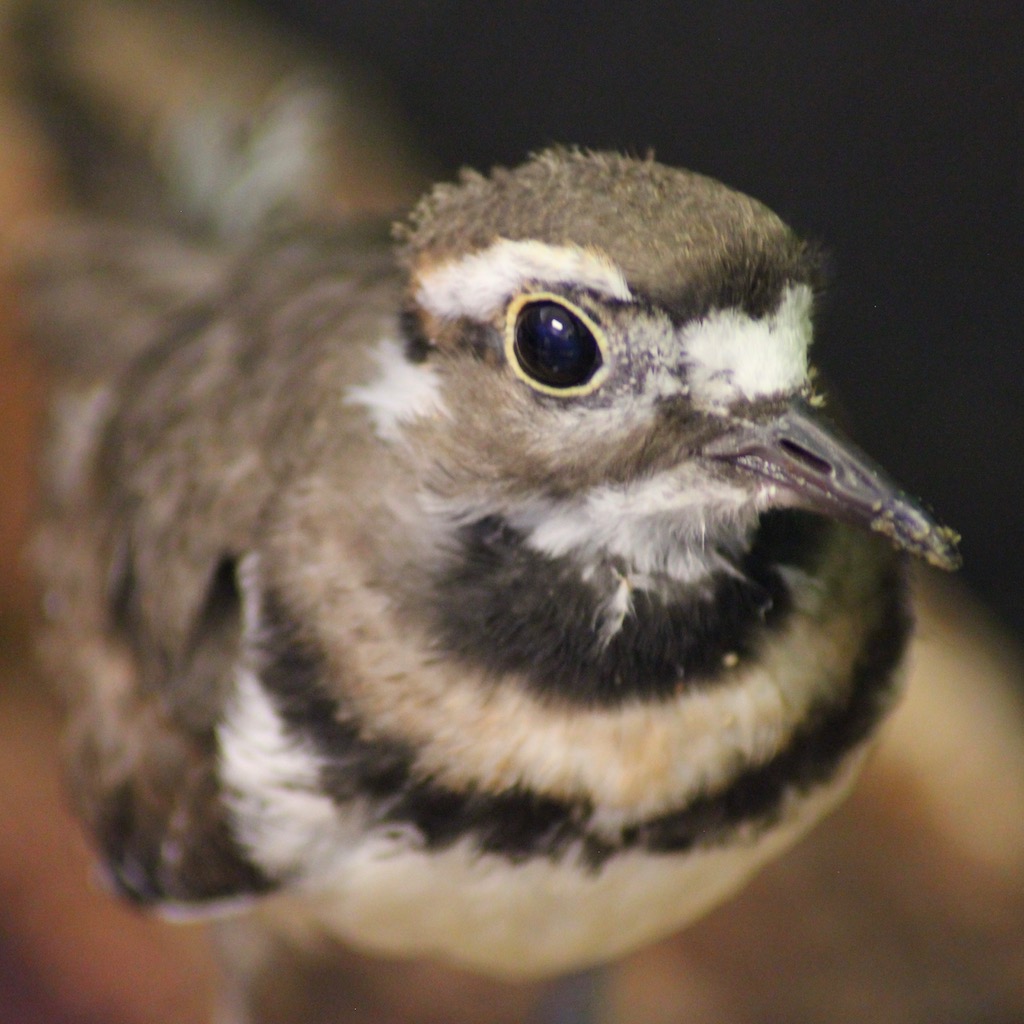
Killdeer and other shorebirds that nest on the ground (often in fields and sometimes in human-made parking lots).
If you have found a killdeer next with small speckled eggs, please avoid the area for 22-28 days that it takes for them to hatch. In parking lots, you may close the stall with a killdeer nest for that time. They will leave the nest and are self-feeding on insects right away. Any truly orphaned killdeer chicks need supplemental heat, we can certainly raise them for release at our facility.
Please email us for further directions if you have found any injured or displaced killdeer (with dead parents nearby). We care for killdeer chicks and adults.
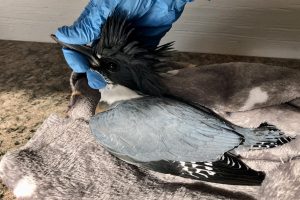
Kingfishers
Kingfishers are carnivorous and colourful birds living by the river banks. During breeding season the Belted Kingfisher pair defends a territory against other kingfishers. They nest in burrows of dirt banks near water.
If you have found an injured kingfisher please beware of sharp beaks which they will use as a spear when approached by humans.
We certainly care for kingfishers. Notify us as soon as possible via email about injured kingfishers.
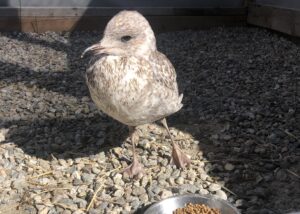
Seagulls
Different types of gulls live in our province and even in the Okanagan we see them around our shorelines. If you have found an injured or sick gull, please ensure that you are using disposable gloves when picking it up (water birds can be carriers of bird flu, do not touch their feces or feathers without gloves).
Identify gulls by clicking here.
We can certainly house and treat gulls. Notify us as soon as possible via email.

Via e-transfer
E-transfer us directly and 100% of your donation goes to us: donate@interiorwildlife.ca
Via PayPal
Click on the icon below to get
re-directed to our PayPal account for secure credit card payment
Via Canada Helps
Click on the icon below to get re-directed to our charity account with CanadaHelps.org
Via Snail Mail
Send a cheque to our office:
PO Box 988
V0H1Z0, Summerland,
BC,
Canada