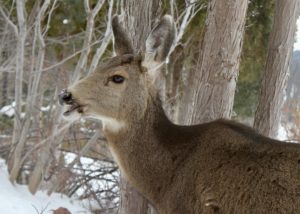
No. Rehabilitation of adult deer is prohibited. Please know, that injured ADULT deer are not candidates for rehabilitation in captivity. This is due to their high stress levels as a prey species, and a fatal condition that they are very likely to develop when handled or captured for care, even short-term (called „Capture Myopathy“).
If you have observed that the adult deer you’re seeing is bleeding, has legs/body parts out of place, entrapped, or got entangled in foreign objects, call the RAPP line service to speak with a local Conservation Officer (CO), phone number: 1.877.952.7277. We have been instructed by the Ministry of Forestry to advise the public to call the RAPP line (connected with COs) when deer inquiries reach us.
The mandate of the Conservation Officer Service (COS) is public safety and wildlife/hunting/fishing/pollution law enforcement, not wildlife care or population management. Our local veterinarians are not allowed to rehabilitate wildlife, their mandate is to medically take care of pets, not wildlife husbandry.
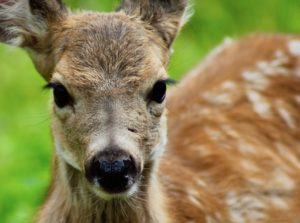
Deer fawns are left alone (for 6-8 hrs/day) by the doe for the first 2 wks of their life. Most fawns are intentionally left (or: hidden from predators) by their mothers who are foraging for food. Fawns don’t have a distinct scent, so they’re safer left hidden opposed to constantly staying with the doe. She returns to feed her fawn a few times a day (usually at dusk & dawn). See more info on fawns under “You’ve found injured or orphaned wildlife, now what?” here: https://www.bcwildlife.org/injuredwildlife.htm
Please note, that the management of deer is mandated by provincial laws and rehabilitation of deer fawns is actually not permitted by the government authorities in the Interior (Okanagan & Thompson Regions). Disease transfer amongst deer in our valley is a concern, which led to the local authorities prohibiting rehabilitation for deer (deer of any age are susceptible to “Chronic Wasting Disease”).
Other licensed rehabilitation facilities which are allowed to care for deer fawns are only permitted to accept a small number of deer fawns (should the mother have been witnessed to be dead/hit by car). However, they can only admit fawns of their region, e.g. in the Kootenays, not from the Okanagan. There is no wildlife rehabilitation centre permitted to care for and release fawns in the Okanagan Valley.
Small mammals may need help, if you see:
- It appears to be covered in bugs
- Disorientation/uncoordinated movement
- Lethargy
- Wounds/ bleeding/ maggots in wound
- Missing lots of fur, or if the fur appears contaminated
- Caught by a cat (seen or suspected)
- Hit by car/farm equipment
- Limping or appears to have any improperly positioned limbs
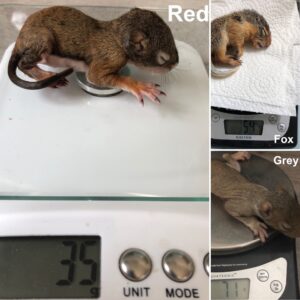
Please find out what type of squirrel it is: grey, red, fox, northern flying, chipmunk or ground squirrel.
All young squirrels open their eyes at about 4 weeks of age and should be furred if admitted to our wildlife centre. Young native squirrel species are a lot smaller as juveniles compared to invasive grey’s (e.g. a baby red squirrel with fur but eyes still closed at 3 weeks old weighs 30g-40g, a baby grey squirrel at the same developmental stage weighs 70g-80g) . If you are unsure, you’re welcome to send us a picture and a weight of the animal. We’ll be glad to assist in telling you what you have in front of you: info@interiorwildlife.ca.
If it is a furred red squirrel or northern flying squirrel and you are unable to “reunite” it with its family, please email us. We will give you directions.
All wildlife rehabilitation facilities in BC rely on the public to transport animals in need to them, as we operate mainly with volunteers and have only enough human resources to tend to the animals brought in. No pick-up service. No wildlife ambulance.
If it is an invasive grey squirrel please email us to get further direction on how to “reunite” it with its family, as rehabilitation by us is not an option.
Note: The public is legally only allowed to keep any wildlife in distress captive for up to 24hrs (regardless of the species).
Wildlife centres receive many calls each year about baby small rodents who have been “orphaned” after a nuisance mouse was trapped or relocated. Sadly, we don’t have the resources to take care of them, and many are turned away. This is also partly due to the fact that their chances of survival after release would be too low. If the habitat of the mice you’ve found was a house, you surely do not want to release them there again (read more: https://www.torontowildlifecentre.com/wildlife-emergency-rescue-hotline/conflicts-with-wildlife/common-rodent-problems/rodent-trapping/). It’s unlikely that most relocated small rodents will survive long in their new environment, even if it sounds nice to us humans to release small rodents to a park or a forested area. The best thing anyone can do is to prevent this endless cycle of unwanted house-rodents from happening by addressing the root cause, removing food attractants & removing any entry points, read more: https://www.torontowildlifecentre.com/wildlife-emergency-rescue-hotline/conflicts-with-wildlife/common-rodent-problems/mice-in-house/. Inform your family and let others know how to prevent human-rodent conflicts at home. |
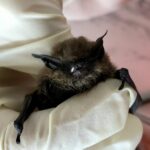
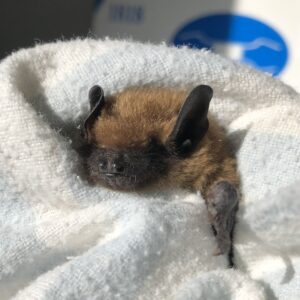
In the winter our native bats are hibernating. They may get aroused from torpor occasionally when the weather warms for a few days and fly in search for a drink at night. This is normal.
An injured bat will hold a wing in an abnormal position, bleed or be entrapped without an escape route to the outdoors. Usually bats crawl to a vertical surface to be able to take flight. Remember: Do not handle bats without leather gloves. We’re happy to answer your bat questions. Simply email us!
For more bat info: There is an Okanagan bat conservation group in BC with a great educational website about all things related to local bats: https://bcbats.ca/

If you are seeing a little bat on the ground, it may be having difficulty taking flight. This can be due to injury, a sudden drop in outside temperature or disorientation inside a building. Usually bats crawl to a vertical surface to be able to take flight. Remember: Do not handle bats without leather gloves. We’re happy to answer your bat questions. Simply email us!
For more bat info: There is a bat conservation group in BC with a great educational website about all things related to local bats and why they are important. Find them here: https://bcbats.ca/
Generally, good info on what to do if you’ve found a bat that isn’t flying away by itself – look here: https://batworld.org/what-to-do-if-you-found_a_bat/

Reunite families
To reunite mother & young (give the adult female access to her babies). Caution: raccoons can carry serious diseases that are zoonotic (we can get sick by touching them or their feces). Always wear gloves when handling baby raccoons! Avoid handling adults. Ask us for advice.
How about we relocate?
Relocation of any kind of wildlife has been proven to be a controversial and outdated option to deal with human-wildlife conflicts.
Reasons include: spreading of species-specific diseases amongst territories of established populations & fights amongst individual wild animals resulting in intruder eradication by established wildlife, and: new animals taking over the area where an unwanted animal was removed from…It is illegal to relocate wildlife without a permit by the BC Ministry of Forests, Lands and Natural Resources.
What can you do?
We discourage any kind of wildlife feeding (including access to garbage), this usually attracts various species of animals and more often than not causes human-wildlife conflict. The raccoon family WILL move on once the juveniles are weaned and able to forage for food by themselves (end of summer). THAT IS YOUR WINDOW to close any gaps, holes, entryways to your house/shed to prevent this raccoon mother to give birth and raise more babies next year in the same spot.
We applaud any action you may be willing to take, in living peacefully with this raccoon family and educating others. We do not consider raccoons as “pests”, however we are aware that officially they are labelled as non-native in the southern interior of BC. See more info here.
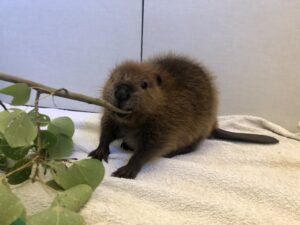
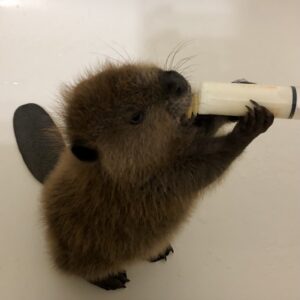
Interior Wildlife is one of the few licensed rehabilitation centers in BC equipped with an aquatic facility to house and care for aquatic mammals year-round (such as beaver or otter).
If you’ve found and injured or displaced beaver (of any age), please email us first before attempting to collect or live-trap the animal. We will give you further directions promptly, that’s 7 days/week: info@interiorwildlife.ca
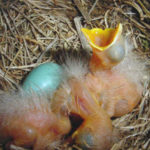
If you find a naked baby bird on the ground, it is best to put it up in a nest (away from cats).
The best course of action is to put the nest up off the ground, close to where you’ve found it (within earshot distance), affix it on a post or a branch away from access by cats. Trust that the parents will come and continue to feed. You can also use a berry basket and line it with grass, if the nest is too broken or can’t be zip-tied to anything. Thank you!
Photo: Robins by Dorothy Edgington
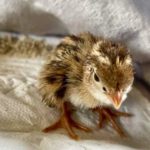
If you find a baby bird on the ground, it is best to leave it alone unless:
- You see any obvious injuries (blood, drooping wings, body parts held in abnormal position…)
- It appears to be especially lethargic/sleepy/drenched wet
- Trapped without being able to exit by itself (e.g. non-flighted gosling/duckling on a roof, chicks that can’t get out of a swimming pool)
- It is unable to hop or walk around
- If after watching for 2 hours, there is no sign of activity from the parents (or other families with chicks, e.g. quail will “adopt” babies of the same size that aren’t their own)
- If you see fledglings in your yard, be sure to keep pets and children away until the birds are off the ground and flying. This can take a few days. Thank you!

Fledgling birds are young birds WITH FEATHERS that have left the nest but are not yet able to fly for about a week after leaving their nest. It’s a normal stage of development for most birds, and it can be a very vulnerable time for them.
Typically the parents will come and feed the fledgling every 15-30 minutes, please don’t intervene prematurely. Songbird fledglings eat very frequently. Remember to watch from a distance so as not to deter the parents from returning.
Most fledglings are totally fine on their own, but if it seems in a dangerous spot, its ok to move it to a more sheltered/shaded location (within eyeshot of where it was found).
Image: A Field Guide To Fledglings, by “Wild Bird Fund”
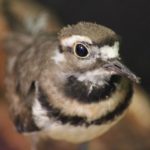
Please find out what type of bird it is: e.g. songbird, raptor/bird of prey, water bird or other.
There are great online tools for bird ID, e.g. All About Birds.
If you are unsure, you’re welcome to send us a picture and we’ll be glad to assist in telling you what you have in front of you: info@interiorwildlife.ca.
Now locate the appropriate facility to contact:
- For waterbirds:
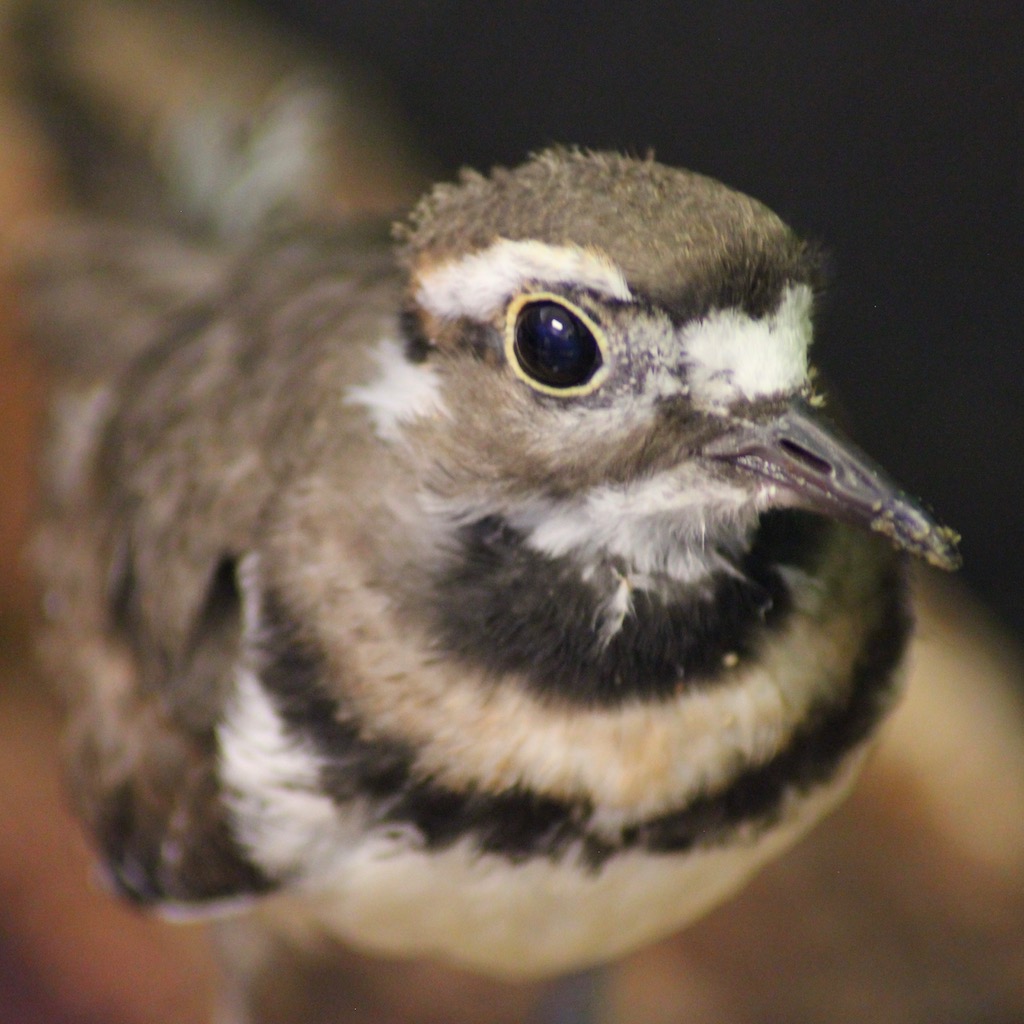
Please read our info on how we admit water birds such as ducks, geese, herons, swans, loons, cranes, pelicans, gulls and killdeer (bird in photo above): interiorwildlife.ca/found-injured-or-orphaned-wildlife
For songbirds:
The BC Wildlife Park has a rehabilitation department in Kamloops.
Phone: 250-573-3242 (ext. 230). Open 9-4 any day of the week.
Find more info here: https://www.bcwildlife.org/injuredwildlife.htm- For raptors (incl. owls, eagles, hawks):
Please contact SORCO in Oliver: https://www.sorco.org/
Now organize transport:
All wildlife rehabilitation facilities in BC rely on the public to transport animals in need to them, as we operate mainly with volunteers and have only enough human resources to tend to the animals brought in. We generally have no pick-up service. No wildlife ambulance exists.
Note: The public is legally only allowed to keep wildlife in distress captive for up to 24hrs.
Water (aka aquatic) birds such as waterfowl, waders and shorebirds include herons, swans, pelicans, kingfishers, loons, grebes, killdeer, gulls, coots, ducks and geese. Water birds may need help, if you see:
Please email us for further directions on next steps BEFORE collecting the animal (unless it is severely injured, actively bleeding, bones sticking out of the skin etc., in which case collect right away and place it in a cardboard box lined with a towel): info@interiorwildlife.ca |


Eurasian Collared Dove (non-native),
Mourning Dove (native)
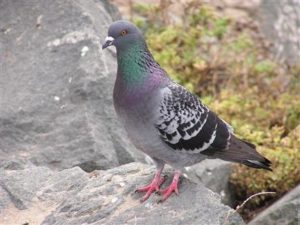
Rock Pigeon (non-native)
Please note our permits do not allow us to rehabilitate non-native species such as rock pigeons. Doves may be rehabilitated at the BC Wildlife Park in Kamloops.

Reptiles including turtles may need help, if you see:
- Obvious wounds or bleeding
- Cracked shell
- Improperly positioned limbs
- Accidentally dug up or uncovered during the winter or when temperatures are below 10 C
- Bit by a pet
- Swallowed fish hook
Turtle identification:
– Red-eared Sliders (two images on right = invasive!)
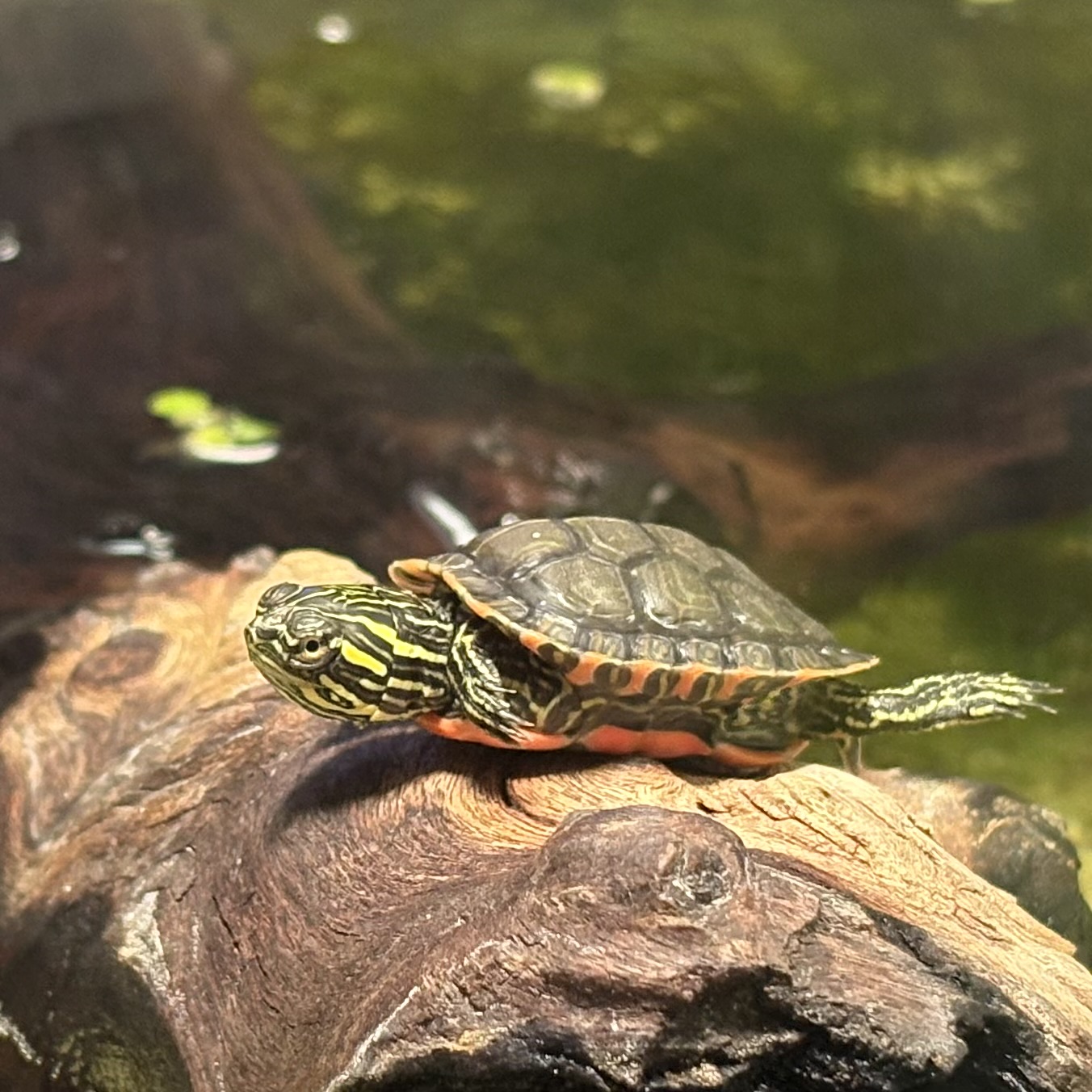
Sliders can be identified by the red ‘ear patch’ on their heads & a blotchy, dull yellow plastron (see belly in bottom right image).
– Painted Turtles (the two images on left = native) have vibrant red colour on their plastron (see belly in bottom left image).
Images: Okanagan Similkameen Stewardship (www.osstewardship.ca/turtles)
Reptiles including snakes may need help, if you see:
- Obvious wounds or bleeding
- A disturbed hibernaculum
- Accidentally dug up or uncovered during the winter or when temperatures are below 10 C
- Bit by a pet
- Entangled in garden netting
- Stuck on glue trap
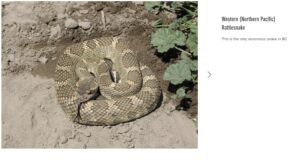
Snake identification:
Go to www.osstewardship.ca/snakes and ID the snake. Do not touch if you are at all unsure what type it is.
Image: Rattle Snake by Okanagan Similkameen Stewardship Society (only venomous snake in the Okanagan)
Via e-transfer
E-transfer us directly and 100% of your donation goes to us: donate@interiorwildlife.ca
Via PayPal
Click on the icon below to get
re-directed to our PayPal account for secure credit card payment
Via Canada Helps
Click on the icon below to get re-directed to our charity account with CanadaHelps.org
Via Snail Mail
Send a cheque to our office:
PO Box 988
V0H1Z0, Summerland,
BC,
Canada